
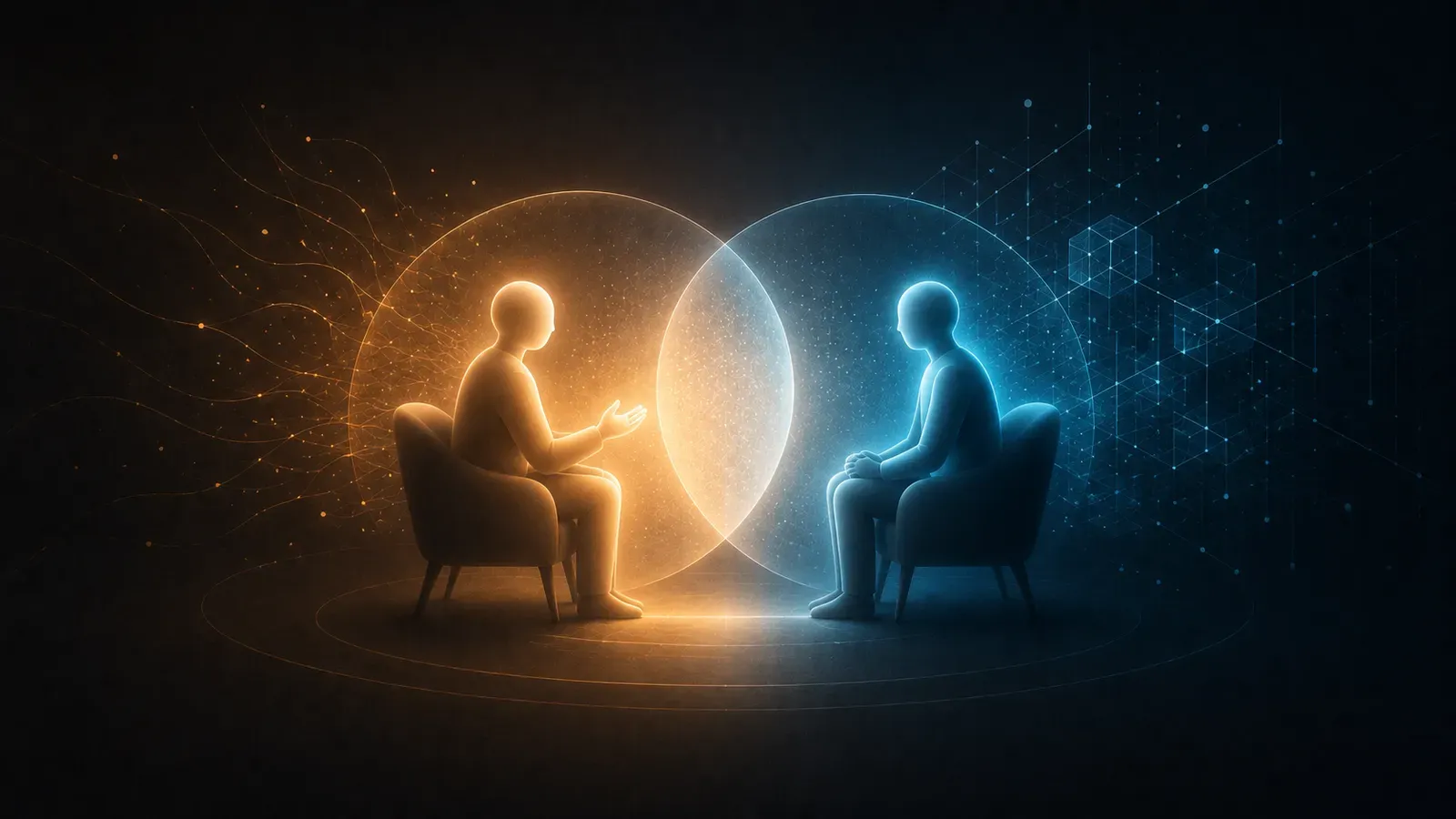
Individual coaching and AI coaching: two levels of the same support
Individual coaching transforms in depth, but a coach can't be everywhere. How AI coaching extends their work between sessions — and why the two are complementary.
Lionel Garnier
CEO & Co-Founder of Vikl, 15 years in Data & AI
A simple observation: a coach can't be everywhere, all the time
Individual coaching is one of the most powerful levers for managerial development. No serious study disputes this. A good coach helps managers step back, identify blind spots, and change their behaviors for the long term.
Its only real limit isn't its effectiveness: it's time. A coach supports a limited number of people in depth, at a necessarily spaced-out pace.
- Format: one session every 2 to 4 weeks, while tensions hit on any given day
- Availability: tailored support takes coach time, which is limited by nature
- Allocation: for lack of that time, coaching is often prioritized for executives and high-potentials
The result: in a company of 500 people, some managers get coaching. The rest — the ones handling daily tensions, giving feedback, holding teams together — often move forward with no support between formal touchpoints.
What human coaching does better
Let's be clear about what a human coach brings that AI can't (yet) replicate:
Relational depth
A human coach builds a trusting relationship over several months. They perceive the unspoken, the hesitations, the contradictions between what the coachee says and what they do. This quality of listening is unmatched.
Deep pattern work
Some managerial issues are rooted in long-standing personal patterns: relationship to authority, fear of conflict, need for control. A trained coach can accompany this kind of deep work. This is not AI's territory.
Caring confrontation
A good coach knows how to tell a manager what no one else dares to say. This confrontation, coming from someone they trust, accelerates awareness like nothing else.
What AI coaching adds on top
Alongside that work, AI covers ground that the format of sessions inevitably leaves open:
Immediate availability
Tensions don't schedule themselves. They hit at 5pm on a Tuesday, between meetings. The manager needs help now — not in 15 days at their next session. AI is there when the need is there, between two appointments with their coach.
Absence of judgment
Paradoxically, some managers open up more easily to an AI than to a human for a first attempt at making sense of things. No fear of being judged, no worry it'll "go up the chain," no shame in admitting they don't know how to handle a situation. This psychological safety frees honest reflection — and often sets up a richer exchange with the coach.
Personalization at scale
A human coach adapts to their coachee through their own lens. A well-designed AI can, in parallel, systematically adapt its approach to the manager's behavioral profile (DISC, for example), their company culture, and even the profile of the team member involved in the tension.
At Vikl, this is exactly what we do: the AI doesn't give the same advice to an analytical manager as to a driver-type manager — and it also adapts suggested formulations to the profile of the person on the receiving end of the feedback.
Reach
A coach supports a limited number of people in depth at any one time: that's the very nature of tailored work. An AI can extend that work to every manager in parallel, without the coach having to clone themselves. Where human coaching changes the trajectory of a few in depth, AI spreads the right reflexes day to day across the whole management line — as a relay for the coach, never in their place.
The real question: replacement or complementarity?
The answer is clear: complementarity.
AI coaching is not a substitute for human coaching. It's a daily relay: it extends the coach's work between sessions and gives day-to-day support to the managers a coach doesn't have time to follow directly.
| Human coaching | AI coaching | |
|---|---|---|
| Strength | Depth, relationship, confrontation | Availability, scale, personalization |
| Frequency | 1–2x / month | On demand, unlimited |
| Role | Deep work, over time | Daily relay between sessions |
| Reach | A few managers, in depth | The whole management line |
| Best for | Personal patterns, transitions | Daily situations, feedback, tensions |
The ideal setup is a two-tier model:
- AI coaching for everyone: continuous, accessible support that helps every manager handle daily tensions and grow between the milestones
- Human coaching for the deep work: for complex situations, role transitions, or managers who need deeper work
Are you a coach? Vikl is designed and trained with coaches to extend your support between sessions: an agent tuned to your method, full coachee confidentiality, and a partner program. Discover the coach offer.
In summary
Individual coaching remains the gold standard of managerial development. But a coach can't support all your managers, all the time, at the exact moment they need it.
AI coaching doesn't claim to replace it. It extends the coach between sessions and fills the gap between annual training that's quickly forgotten and one-on-one support that's necessarily limited in time — so every manager finally has daily support.
The question is no longer "human coaching or AI coaching?" It's: "How do you give every one of your managers the support they deserve?"
Related articles
AI and management: how artificial intelligence is transforming human interactions at work
Artificial intelligence is redefining employees' daily work and the role of managers. Stakes, key figures and levers for action for leaders and HR directors of French mid-sized companies.
Will AI replace coaches? What the profession risks (and doesn't)
Will AI replace coaches? The real answer: it shifts the value of the job toward what it can't do. Relationship, presence, meaning. What changes, and what doesn't.
The confidentiality paradox: reassuring the manager without blinding HR
A manager only opens a tool about a difficult situation if they're sure no one will read it. But the HR leader who pays needs visibility. How we reconcile the two, without surveillance, without betraying the manager.