

AI and management: how artificial intelligence is transforming human interactions at work
Artificial intelligence is redefining employees' daily work and the role of managers. Stakes, key figures and levers for action for leaders and HR directors of French mid-sized companies.
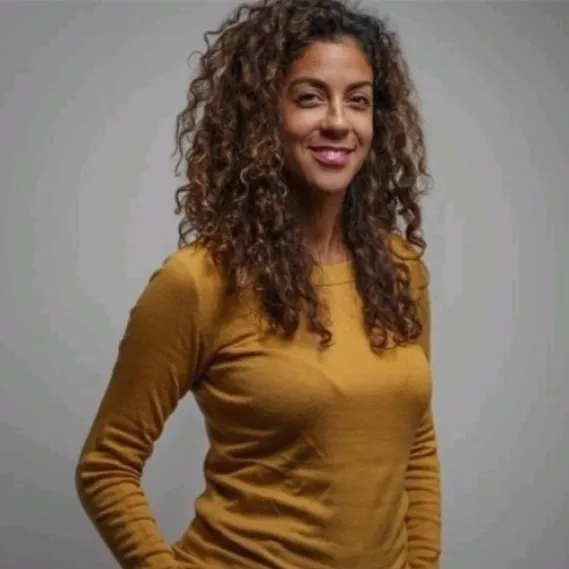
Chloé Rodrigo
Chief Operating Officer at Vikl, 15 years in HR transformation
In short. AI is transforming the company, but it shifts the manager's value toward what it can't do: defusing, listening, refocusing. With workplace tension costing 152 billion euros a year in France, relational skill becomes the most strategic managerial competence, and specialized AI can help equip it.
Artificial intelligence is no longer a distant promise: it has entered employees' daily work. Assisted writing, meeting summaries, data analysis, conversational agents. In 2026, the question is no longer whether AI is transforming the company, but how it is reshaping the most human part of work: the interactions between people. And at the center of this transformation, one role concentrates all the tension: management.
AI has settled into the everyday, and it's reshuffling the deck
In just a few years, generative AI has moved from the lab to the workstation. Employees use it to produce faster, learn faster, decide faster. Organizations gain in productivity, but they're discovering a paradox few had anticipated: the more AI settles into employees' daily work, the more the manager's value shifts toward what AI doesn't do, namely defusing, refocusing, listening. The relational becomes the critical skill.
- Coordinating different personalities.
- Giving difficult feedback.
- Announcing a reorganization.
- Handling an employee losing motivation, a multigenerational team, a disagreement that's festering.
No algorithm lives through these situations in the manager's place. They even become more frequent and more sensitive as AI accelerates the pace, shifts roles, and feeds anxieties about the future of jobs.
The managerial transformation underway is therefore not only technological. It is relational.
The invisible cost of tension at work
The figures from the French market show the scale of the stakes. According to the Observatory of the Cost of Workplace Conflict (OpinionWay), relational tension represents 152 billion euros in losses per year in France, across productivity, engagement, absenteeism and turnover. Each manager spends an average of three hours per week handling micro-conflict. And 7 managers out of 10 admit they lack the tools to deal with day-to-day tension.
The paradox is striking: French companies invest 2.5 billion euros per year in management and leadership training, yet the manager is left alone at the precise moment tension arises. The training happened six months ago; the coach is available next month; the conflict, meanwhile, is happening now. This is what HR departments increasingly call manager isolation, a blind spot of workplace well-being, identified as a major concern for senior executives.
The manager's new role: from expert to relational leader
For decades, we promoted the best experts to manager, assuming technical competence would be enough. AI makes that logic obsolete: technical expertise is now shared with the machine, but situational intelligence, listening, and the ability to defuse tension remain exclusively human skills, and become the most strategic ones.
For leaders and HR directors of mid-sized companies, three priorities stand out:
- Reassess the key skills. Soft skills (feedback, conflict management, managerial posture) are no longer a training add-on: they are the core of the manager's job in the age of AI.
- Move from one-off training to continuous support. An annual seminar doesn't prepare you for tension that erupts on a Tuesday at 5 p.m. Managerial development must move closer to the field and to real time.
- Measure what was invisible. Recurring tension, weak signals within teams, real training needs: the organizations that learn to make this data tangible will gain an edge on retention and collective performance.
AI, part of the problem and part of the solution
This is where the story gets interesting: the same technology that disrupts relational balances can also equip those who carry them. A new generation of tools is emerging, not generic AI, but AI specialized in human interactions, trained with coaches, psychologists and mediators.
For the leaders and HR directors evaluating these solutions, four criteria make the difference:
- Relational specialization. A generalist AI masters neither managerial posture nor the company's context, except through a well-crafted prompt.
- Native confidentiality. GDPR and AI Act compliance by design, with no named data reported back to the employer: this is the non-negotiable condition for managers to adopt it.
- Complementarity with what exists. The tool must reinforce existing training and coaching, not compete with them.
- Aggregated data. Anonymized visibility into recurring tension, without surveillance of individuals.
This is the conviction that gave rise to Vikl, the AI companion for managers: a confidential space, available at the exact moment tension arises, to analyze the situation and take action. Not to replace the coach, the trainer or HR, but to act in the in-between, where the manager was alone until now.
For coaches and support professionals, this shift is not a threat: it's an extension of their impact between sessions, and a way into populations they couldn't reach. Where one-on-one coaching stays reserved for executives and high potentials, specialized AI finally makes it possible to extend it to the entire management line, including frontline managers and first-time leaders, the very people who concentrate the most tension and receive the least support.
What to remember
Artificial intelligence doesn't dehumanize the company: by contrast, it reveals the immense value of what is irreducibly human. For leaders and HR directors of French mid-sized companies, the strategic question of 2026 isn't "should we adopt AI?" but "how do we equip our managers for the human interactions that AI makes more decisive than ever?".
The organizations that answer this question will win on every front: engagement, retention, collective performance, and appeal to the talent who have already made their choice.
Related articles
The confidentiality paradox: reassuring the manager without blinding HR
A manager only opens a tool about a difficult situation if they're sure no one will read it. But the HR leader who pays needs visibility. How we reconcile the two, without surveillance, without betraying the manager.
A companion for difficult management situations: what it's actually for
Not one more productivity tool, but a relational companion: what an AI companion concretely does when a manager faces a conflict, a reprimand or a delicate decision.
How to support your managers day to day: the guide for HR leaders
Training managers is no longer enough: they need support the moment tension arises. Five concrete levers to move from one-off training to continuous support, at scale.